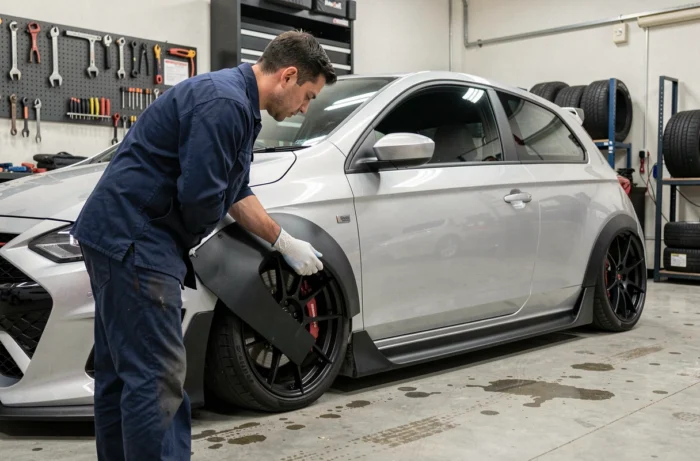
The market for car tuning accessories in France is structured around two main axes: aesthetic modification and mechanical performance enhancement. These two approaches follow different logics and, above all, different regulatory frameworks that most online guides overlook. Personalizing a vehicle is not just about choosing a part from a catalog. Each modification impacts the vehicle’s compliance, insurability, and resale value.
Individual Approval: The Point That Accessory Sellers Do Not Explain
Buying a body kit or sport suspensions with CE approval is reassuring, but an approved part does not guarantee the compliance of the modified vehicle. The DREAL Auvergne-Rhône-Alpes explicitly distinguishes between the status of an isolated part and the approval of the vehicle as a whole after modification.
In practice, modifying the wheels, suspension, lighting, or engine power may trigger the obligation for an individual approval (RTI). This procedure evaluates the entire vehicle, not just the added part. The DREAL recommends checking the feasibility of a modification before starting work, as certain changes may affect the certificate of conformity.
Another common confusion: passing the technical inspection does not regularize an unapproved modification. The technical inspection examines the general condition of the vehicle, not the legality of the modifications made. A vehicle can pass the technical inspection with modified suspensions while still being non-compliant from an administrative standpoint. Several automotive regulation specialists, including those who offer catalogs on vegatuning.fr, emphasize the importance of reconciling the two approaches before finalizing a customization project.

Body Tuning Accessories: What Really Changes the Vehicle
Exterior modifications represent the most visible segment of car tuning. However, not all have the same impact on approval or the same ratio between investment and result.
Low Regulatory Impact Modifications
Wrapping (adhesive film on the body), stickers, and replacing mirrors with models compatible with the original vehicle generally do not require an RTI. These accessories change the appearance without affecting the structure or safety components.
However, changing the color through wrapping requires updating the registration document if the dominant color changes. This is a simple administrative step, but often forgotten.
Modifications That Affect Compliance
Wide body kits (fender flares, modified bumpers), lighting modifications, and changing the dimensions of wheels and tires fall into another category. They can alter the vehicle’s overall dimensions, weight distribution, or lighting efficiency.
- Wheels with a diameter larger than the original fit can change the dynamic behavior and may distort the speedometer if the overall wheel diameter changes.
- Replacing headlights with LED models not provided by the manufacturer raises an approval issue for the lighting, even if the LEDs are sold as “compatible.”
- Lowered suspensions (short or coilover) change the ground clearance and steering angle, two parameters checked during an RTI.
In each case, the DREAL may require an individual approval if the modification exceeds the tolerances of the original certificate of conformity.
Engine Tuning and Reprogramming: Performance vs. Insurability
Reprogramming the engine control unit has become the most common performance modification. It involves altering the injection, turbo pressure, and ignition maps to increase power.
The gain is real and measurable on a dynamometer. However, any increase in power must be declared to the insurer. An undeclared reprogramming can lead to the nullification of the contract in the event of a claim, even if the reprogramming is not the direct cause of the accident.
From an administrative perspective, a vehicle whose actual power exceeds that stated on the registration document is in violation. Bringing it into compliance requires an RTI, with a dynamometer test and an update of the registration certificate. This process costs time and money, which many tuners do not mention at the time of sale.
LPG Conversion and Electric Retrofit
For those focusing their project on energy optimization rather than raw power, the DREAL Auvergne-Rhône-Alpes specifies that the installation or removal of an LPG kit falls under an approval procedure. Electric retrofitting requires a homologated transformation, carried out by an installer authorized by the kit manufacturer. These constraints exist to ensure the vehicle’s safety after conversion, and they apply regardless of the vehicle’s brand.
Interior Accessories and Cabin Customization
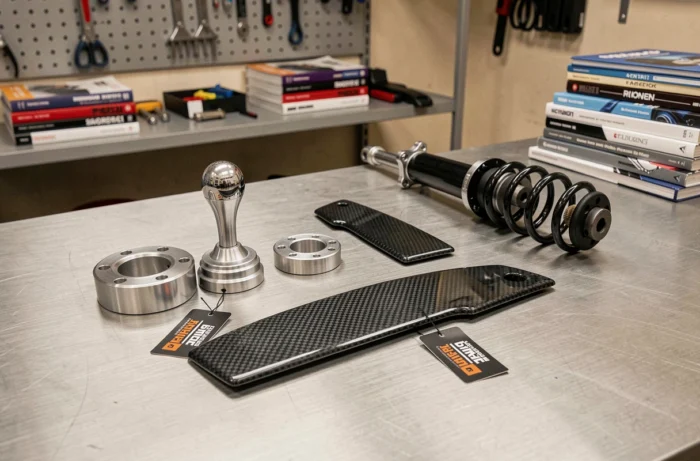
The vehicle’s interior offers a more flexible area for customization from a regulatory standpoint. Replacing the original seats with sport bucket seats, adding a flat-bottom steering wheel, or installing an aluminum pedal set generally do not require an RTI in most cases.
There are two limits. Bucket seats must remain compatible with the vehicle’s seatbelt system. A seat incompatible with the original three-point seatbelt compromises passive safety and constitutes a reason for a re-inspection during the technical inspection. Replacing the steering wheel with a model without an airbag removes a passive safety element included in the original approval.
Purely decorative accessories (LED ambient lighting in the cabin, seat covers, custom mats) do not pose any compliance issues and often represent the best ratio between investment and visual satisfaction.
Car tuning remains an approach where each modification requires a specific regulatory check. The boundary between free customization and modifications subject to approval is not always intuitive, and it varies according to the characteristics of the original vehicle. Consulting the FAQ of the DREAL in one’s region before starting work remains the most concrete precaution to avoid a refusal at the technical inspection or a dispute with the insurer.