Precision is essential in cooking, where a small mistake in measurements can turn a delicious dish into a culinary disaster. Whether it’s adjusting an American recipe into grams or converting milliliters into cups, knowing measurement conversions is indispensable for any amateur or professional cook.
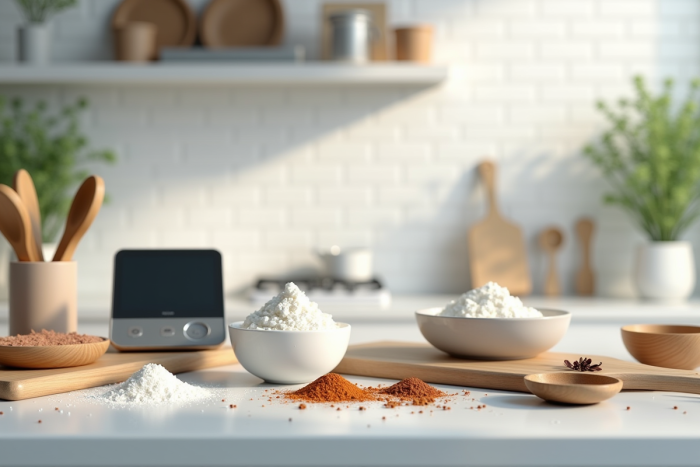
Using the right tools, such as digital scales and measuring spoons, greatly facilitates these conversions. A good mastery of common equivalents, such as 1 cup equals 240 ml or 1 ounce equals about 28 grams, allows for accurate recipe following.
The Basics of Measurement Conversions in Cooking
Understanding measurement conversions is essential for success in the kitchen. Measurement units often vary between metric and imperial systems, and knowing how to switch from one to the other is crucial.
1 cup (US) is approximately 240 ml. This volume may vary slightly depending on the liquids or solids being measured. For liquids, 1 cup of water will correspond exactly to 240 ml, but for ingredients like flour, the volume may differ based on density and the filling method.
To assist with these conversions, use precise tools:
- Digital scales: ideal for measuring solid ingredients in grams.
- Measuring spoons and cups: convenient for small quantities.
For example, to convert milliliters to grams, you need to know the density of the ingredient. 250 ml converted to g will not yield the same result if you are measuring water, oil, or flour. For accurate conversions, refer to specific density charts or use reliable online calculators.
| Ingredient | 250 ml in g |
|---|---|
| Water | 250 g |
| Flour | about 125 g |
| Sugar | about 200 g |
Follow these basics and use appropriate tools to ensure precise conversions in cooking. Knowing these equivalents and methods will enable you to master any recipe, regardless of its geographical origin. 
Practical Examples and Tips for Accurate Conversions
To master measurement conversions in cooking, here are some practical examples and tips.
Liquid Conversions
1 cup of water (US) corresponds to 240 ml. For other liquids, like milk or oil, the conversion is similar. For denser liquids, like honey or maple syrup, use a scale for more precision.
- 1 tablespoon (US) = 15 ml
- 1 teaspoon (US) = 5 ml
Solid Conversions
Solids require more precision. Use a digital scale to measure in grams. For example:
- 1 cup of flour = about 125 g
- 1 cup of sugar = about 200 g
Density Table
For accurate conversions, consult density charts. Here are some common references:
| Ingredient | 1 cup in g |
|---|---|
| Flour | 125 g |
| Sugar | 200 g |
| Butter | 227 g |
Practical Tips
To avoid mistakes:
- Use measuring cups and spoons specific to liquids and solids.
- Slightly pack ingredients like flour for a more accurate measure.
- Consult reliable resources for specific conversions.
These tips will help you navigate between different measurement units and succeed in your recipes, whether they are in metric or imperial systems.