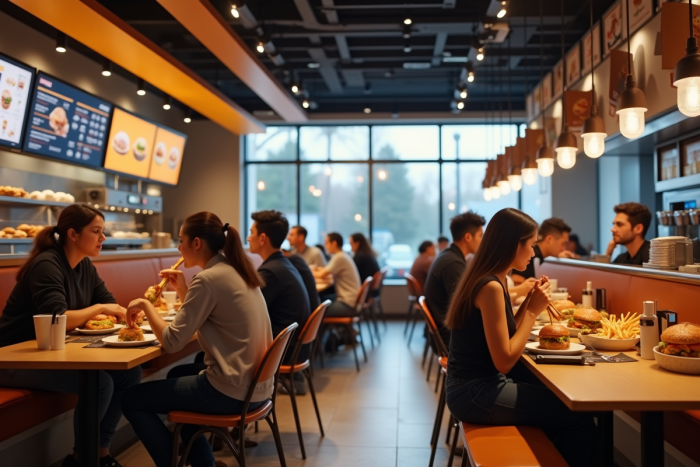
Eating habits are evolving rapidly, and the year 2024 is no exception. Consumers are increasingly seeking fast food options that combine convenience and health. Fast food chains have therefore multiplied initiatives to meet this growing demand by integrating organic ingredients, vegetarian alternatives, and more balanced dishes into their menus.
At the same time, technology has played a fundamental role in this transformation. Online ordering apps and interactive kiosks have become widespread, making the ordering process smoother and more personalized. Deliveries by drones and robots have begun to democratize, redefining the fast food experience. The impact of these innovations on sales and customer satisfaction has been significant, marking a pivotal year for the sector.
New Food Trends in Fast Food
The year 2024 has seen the emergence of unprecedented trends in the fast food sector. Consumers, more demanding, now want to combine speed with nutritional quality. Several key areas are emerging:
- Healthy eating: establishments are incorporating balanced menus rich in vegetables, plant proteins, and gluten-free options.
- Product origin: traceability and the local origin of ingredients have become criteria for customers’ choices.
- Customized menus: thanks to mobile apps, customers can personalize their orders according to their nutritional preferences.
Traditional restaurateurs are responding to these expectations by diversifying their offerings. Generation Z and Millennials, the drivers of this evolution, are favoring innovative concepts like ‘solo dining’ or targeted promotions via social media. World cuisines, particularly Japanese, Peruvian, and Caribbean, are experiencing growing success, enriching the French culinary landscape.
Third-party delivery services have also gained popularity, allowing consumers to receive their meals quickly and efficiently. Drone delivery, still in the testing phase, could soon revolutionize the market. However, prices remain a determining factor: the price of the Happy Meal in 2024, for example, illustrates the effort of chains to adapt their offerings to budget-conscious customers.
For restaurateurs, these new trends represent both a challenge and an opportunity. They must rethink their business models and adapt to the changing expectations of consumers while integrating cutting-edge technologies to enhance the customer experience. The fast food market in France is thus undergoing a transformation, driven by increasingly diverse and demanding consumer demand.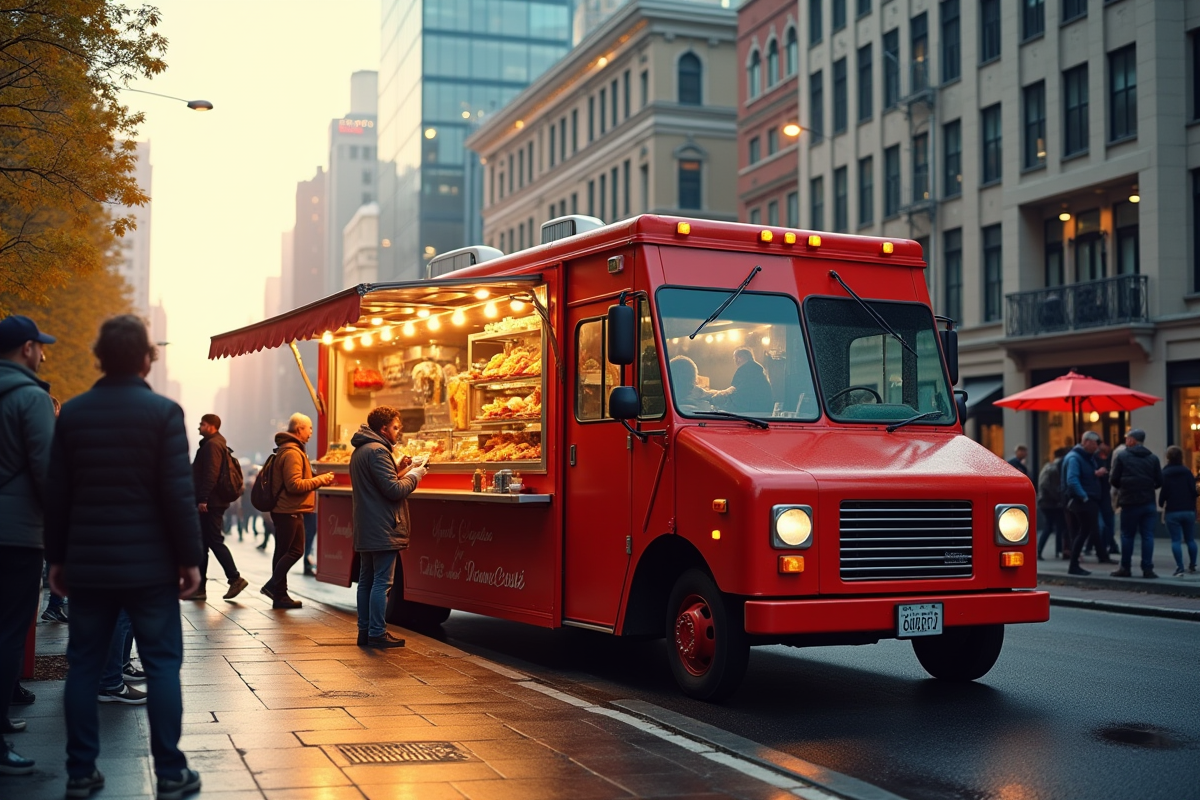
Technological Innovations and Their Impact on the Sector
Technology is profoundly transforming the fast food sector. Investments in digital tools and automated solutions allow establishments to streamline their operations and improve the customer experience. Here are some notable examples:
- Interactive ordering kiosks: these devices, present in many establishments, reduce waiting times and allow for greater customization of orders.
- Mobile apps: they facilitate not only remote ordering but also customer loyalty through reward programs and personalized offers.
- Artificial intelligence: used to analyze customer data and optimize inventory, it contributes to better resource management.
The impact of these technologies on restaurant revenue is significant. Restaurateurs who adopt these innovations see an increase in customer satisfaction and a rise in sales. The use of blockchain for product traceability meets the growing consumer demand for transparency while reducing risks related to food fraud.
Delivery services, in partnership with specialized platforms, also benefit from these advancements. Delivery routing algorithms optimize routes, thereby reducing delays and transportation costs. The use of robots and drones for delivery, although still experimental, promises to accelerate these processes and reduce operational costs.
The digitization of reservations and payments through online platforms simplifies the management of customer flows and improves the accuracy of attendance forecasts. This technological evolution, while demanding in terms of initial investments, represents a strategic lever for establishments wishing to stand out in an increasingly competitive market.