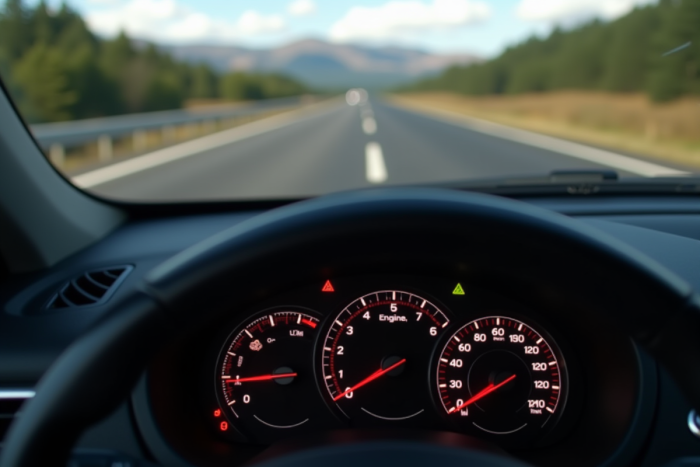
On the road, the dashboard warning lights play a fundamental role in vehicle safety and maintenance. Yet, many drivers ignore them, putting their lives and those of others at risk. Whether it’s a simple warning or a major alert signal, each light deserves special attention.
A lack of knowledge or negligence can turn a minor failure into a serious problem. The warning lights, true sentinels of our cars, must be understood and respected. Ignoring these signals can lead to costly breakdowns and dangerous situations on the road.
The different categories of warning lights
Warning lights come in several categories, each with a specific meaning. These visual signals are essential for informing the driver about the state of their vehicle. They are mainly divided into three categories: green or blue lights, orange lights, and red lights.
Green and blue lights
Green and blue lights generally indicate information related to the vehicle’s lighting. They are found for:
- The position lights
- The low beam headlights
- The turn signals
- The front fog lights
- The high beam headlights
These lights signal that the systems are activated but do not present an immediate danger.
Orange lights
Orange lights, on the other hand, signify an alert. They draw attention to mechanical or electronic anomalies. Common situations include:
- Insufficient oil level
- Tire pressure issue
- Brake system failure
These lights call for a quick check to avoid potential complications. For example, the meaning of the warning light on the dashboard of the Iveco Daily 35C11 is essential to prevent major mechanical problems.
Red lights
Red lights signal an emergency. Their appearance requires immediate intervention. Among them, we find:
- The engine oil pressure light
- The coolant temperature light
- The parking brake light
These signals should never be ignored, as they indicate situations that could jeopardize the safety of the driver and passengers. Ignoring these lights can lead to serious breakdowns or even accidents.

Why you should not ignore warning lights
The warning lights on the dashboard should never be taken lightly. Ignoring these signals can lead to serious consequences for the safety of the driver and passengers. Orange lights warn of a mechanical or electronic anomaly that requires quick verification. For example, an orange engine oil level light indicates that intervention is necessary to avoid more significant damage.
The red lights, on the other hand, signal an emergency that requires immediate action. A red engine oil pressure light, for example, alerts to a critical situation that can lead to engine failure if not addressed quickly. Similarly, a red coolant temperature light warns of engine overheating, requiring an immediate stop of the vehicle to avoid irreversible damage.
Financial and safety consequences
The costs associated with ignoring warning lights can be exorbitant. An engine breakdown due to a lack of monitoring can lead to very high repair costs. Neglecting a red light may require the intervention of a tow truck and prolonged immobilization of the vehicle, causing considerable inconvenience.
In terms of safety, ignoring these lights can endanger the lives of the vehicle’s occupants. A failure of critical systems such as brakes or power steering can lead to serious accidents. Adhering to the dashboard alert signals is therefore essential to ensure road safety and prevent dangerous situations.