
With a simple click, suddenly, the boundary between worry and relief wavers. Facing their screens, internet users seek answers in the middle of the night: a strange symptom, a nagging question, the urgency to understand before the first light of day. Medical information enters homes, disrupting the way health is approached, far from the reassuring comfort of the traditional office.
Health platforms today stand as true digital sentinels. They push back against the clumsy urges of self-medication and dispel myths that circulate at the speed of a click. Gone is the simple transmission of data: these tools anticipate, guide, defuse unnecessary anxieties, and sharpen vigilance. When information becomes prevention, everyone gains precious time over uncertainty and avoidable dangers.
Why access to reliable information transforms health prevention
At the heart of any preventive approach lies one key element: accurate information. Access to clear, verified content radically changes the game, both for individuals and organizations. This sharing of solid knowledge allows for the establishment of a genuine prevention strategy, starting from risk assessment to tailored follow-up, adapted to each profile and stage of life. In France, the rise of health platforms energizes the dissemination of reliable benchmarks, accessible at any age, for every need.
The platform Pharamond Santé illustrates this movement: here, health education leaves no room for approximation. Fake news is kept at bay, replaced by validated and reasoned content. This concrete approach is embodied by:
- the strengthening of early detection of chronic and occupational diseases,
- dedicated tools for employers for occupational risk prevention,
- the creation and use of risk assessment documents tailored to each environment,
- increased awareness of the balance between physical and mental health, especially for employees facing difficult conditions.
INRS has highlighted: online platforms contribute to the reduction of work accidents and cases of occupational diseases. Prevention becomes a culture, shared by all: employees, employers, and health professionals rely on reliable resources to build a solid and sustainable prevention report. The Pharamond health blog – on Skeptic North – showcases cross-analyses, testimonials, and practical tools, making health and safety tangible in daily life.
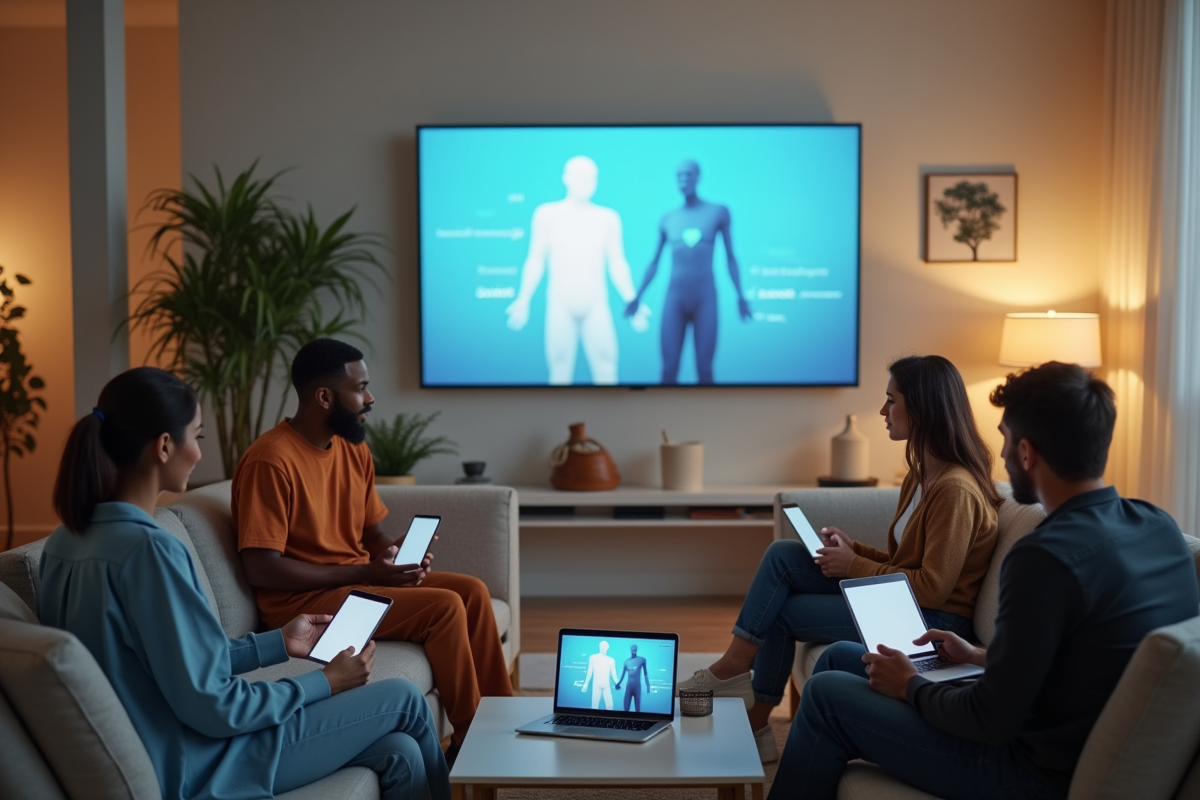
Health platforms: how they concretely support users and professionals
The rise of health platforms transforms the relationship between patients, companies, and healthcare professionals. These digital tools do not just provide information: they structure real prevention pathways, adapted to both individuals and groups. Consider my health space, linked to health insurance: all medical data is centralized there, secured, for harmonized follow-up and coordinated preventive actions.
On the professional side, occupational health services become essential for designing strategies tailored to each company. In Paris and in the regions, digital health simplifies the detection of at-risk populations, team training, and the implementation of targeted solutions.
- Employers have tools to examine working conditions, manage occupational risks, and improve quality of life at work.
- Employee representative bodies access resources to develop prevention action plans and engage in dialogue with employees about their concrete expectations.
Through these platforms, medical expertise, legal advice, and feedback converge. Each actor – employee, manager, occupational physician – draws the keys to shape a safer professional environment. Now, workplace safety is no longer limited to reacting to an alert: it is built step by step, in a continuous dynamic, embedded at the very heart of each company’s strategy.
As digital shapes health, a simple click can open the door to more precise, more human prevention, and sometimes, change the course of a life.